Western Sydney University Medicine has a fairly unique selection process, heavily weighing certain UCAT subtests over others, with a particular focus on community awareness during the interview.
I'm in my second year of Medicine at WSU, and this is the guide I wish I had when I was applying.
What Is the WSU Medicine Program?
WSU offers a 5-year undergraduate Bachelor of Clinical Science/Doctor of Medicine (BClinSci/MD), based at the Campbelltown campus. The program has a strong focus on training doctors for the Greater Western Sydney community, with a problem-based learning model and early clinical exposure from year one.
One thing that genuinely surprised me once I started was a subject called Medicine in Context, which I haven't heard of at other medical schools. It specifically teaches community-focused medicine: how to think about the populations you'll be treating, social determinants of health, and what it means to practise medicine in a community setting. It reflects what WSU is actually about, and it's one of the things that makes the program distinctly different.
Entry Requirements at a Glance
| Applicant Type | ATAR Threshold |
|---|---|
| Metro (NSW) | 95.5 |
| Greater Western Sydney (GWS) | 93.5 |
| Rural (REAS) | 91.5 |
These are hard cutoffs. You must meet them to be considered, but exceeding the threshold gives you no advantage whatsoever. More on that below.
Course code: 725505 (Bachelor of Clinical Science (Medicine)/Doctor of Medicine (MD)) Application via: UAC Deadline: 30 September (for the following year's commencement). No exceptions.
Graduate and Non-Standard Applicants
WSU is one of the only undergraduate medicine programs in Australia that allows non-standard applicants (people who have already commenced or completed a university degree) to apply. GPA requirements vary depending on your GWS status, degree type, and how much of the degree you've completed. If you didn't get in straight from school, this pathway is worth understanding carefully.
Interstate Applicants
Metro applicants from outside NSW are eligible to apply, but the UCAT threshold applied to interstate students is significantly higher than for NSW applicants. It's technically open, but in practice you'd need an exceptionally strong weighted UCAT score to be competitive.
The Single Most Important Thing to Understand About WSU
ATAR is a threshold. UCAT gets you the interview. Interview gets you the offer.
This is the most strategically significant feature of WSU's selection process, and most students don't fully appreciate it.
Once you clear the ATAR threshold, your ATAR plays no further role. A student with a 99.95 ATAR and a student with a 95.5 ATAR are identical at this point. Interview invitations are issued solely based on your weighted UCAT score, with approximately 450 sent each year. Final offers are then determined by:
- 75% interview performance
- 25% weighted UCAT score
Your UCAT and your MMI are effectively the entire competition.
WSU's Unique UCAT Weighting
WSU doesn't use your total UCAT score. They apply a specific subtest weighting to generate their own score out of 900:
| Subtest | Weighting |
|---|---|
| Verbal Reasoning (VR) | 60% |
| Decision Making (DM) | 20% |
| Quantitative Reasoning (QR) | 20% |
| Situational Judgement (SJT) | Not included |
VR is worth more than DM and QR combined. This means your overall UCAT percentile can be genuinely misleading for WSU purposes. A student at the 93rd percentile overall with a high VR score can outperform a student at the 96th percentile with a weaker VR when WSU's formula is applied.
What score do you need?
WSU doesn't publish a cutoff, but based on Voyager Academy's analysis of recent admission rounds, our estimates (speculative) are:
- GWS applicants: ~765/900 weighted score as a minimum
- Non-GWS applicants: ~800/900 weighted score as a minimum
These are estimates based on observed patterns, not published figures. They give you a realistic target to work towards.
What this means for preparation
If WSU is your target, VR deserves disproportionate preparation time. Don't spread your practice evenly across subtests — VR is the single highest-leverage subtest for this specific application. DM and QR matter equally to each other, and SJT doesn't factor in at all.
The WSU MMI: What to Expect
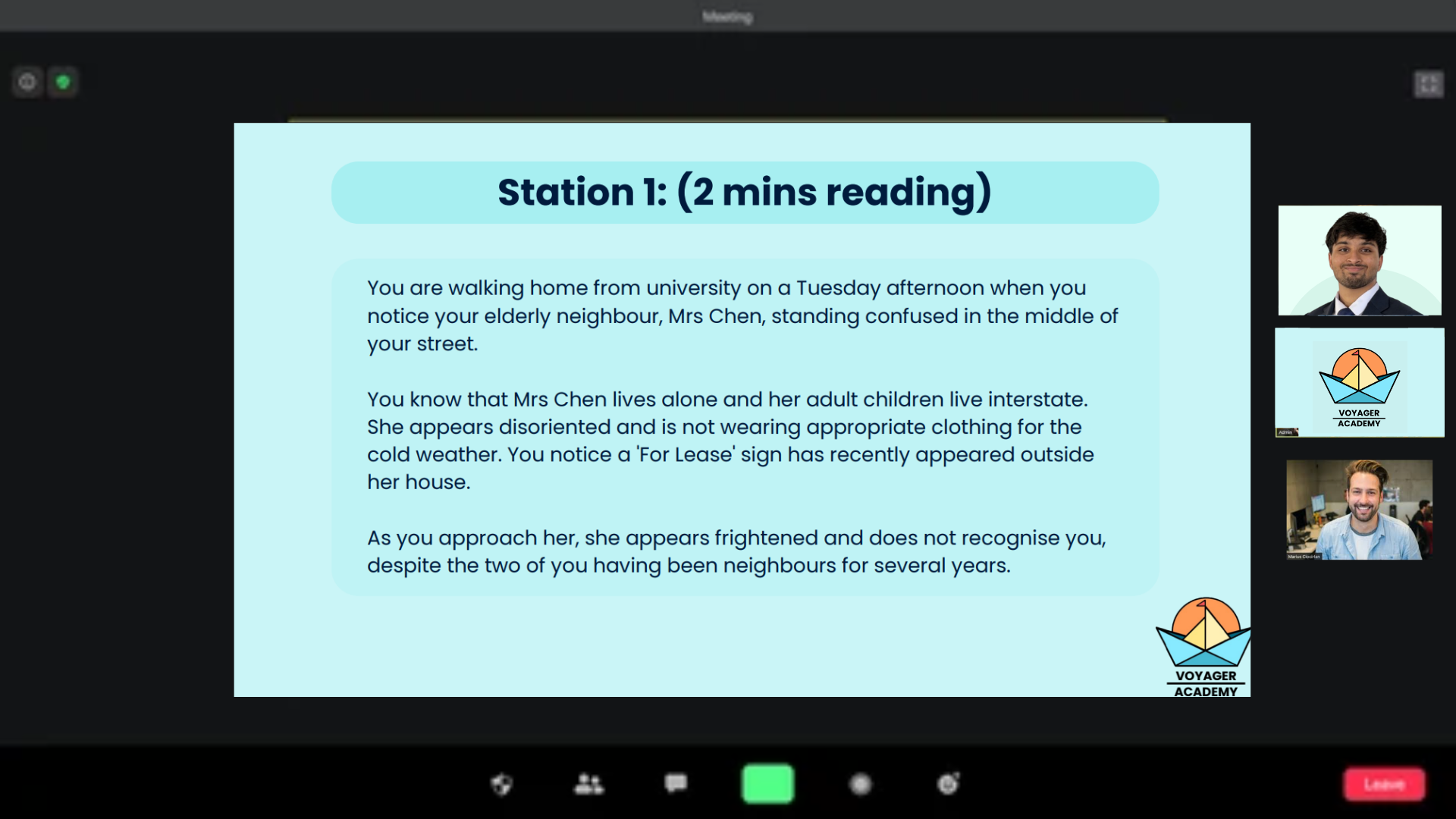
WSU's interview is a Multi-Station Mini Interview (MMI), conducted via Zoom in late November each year.
The format:
- Multiple stations, each approximately 8 minutes
- A different interviewer at each station
- Brief reading time before each station begins
WSU's MMI is well known for its emphasis on community values, empathy, and social awareness, which directly reflects the program's mission to produce doctors for the Western Sydney community. You won't be asked to recite medical knowledge or work through roleplay scenarios. You will be assessed on how you think, how you communicate, and how you relate to people.
Common WSU MMI themes
- Community health and social equity scenarios
- Ethical dilemmas without a clear right answer
- Questions about your motivations for medicine
- Reflection on personal values and experiences
- Teamwork and how you handle difficult situations
What WSU is actually looking for
The university explicitly assesses "non-cognitive qualities important to patients and communities." They are not looking for the most academically impressive candidate. They are looking for someone who will be a good doctor in the Western Sydney context. Genuine empathy, clear communication, cultural awareness, and composure under pressure are what moves the needle.
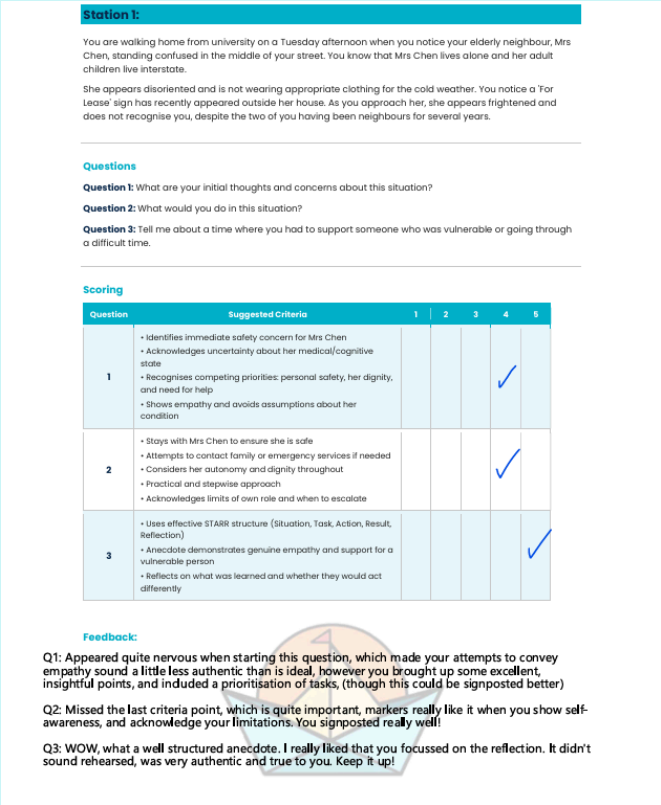
A structured response framework is enormously helpful. Students who ramble or over-qualify every statement tend to lose marks. Practice delivering a clear, grounded answer first, then use the remaining time to explore nuance.
One thing most students underestimate: the Zoom format is harder than it looks. Eye contact, composure and clear speech are all more difficult over video than in person. Students who don't specifically practise on Zoom are at a real disadvantage.
Application Timeline
| Step | When |
|---|---|
| Sit the UCAT ANZ | July – August |
| Submit UAC application (include UCAT number) | By 30 September |
| Interview invitations issued | Mid–late October |
| MMI interviews held via Zoom | Late November |
| Offers issued | December (main UAC round) |
The 30 September deadline is absolute. No late applications are accepted under any circumstances.
GWS and Rural Applicants
If you live in Greater Western Sydney, you qualify for the GWS subquota, which comes with a lower ATAR threshold and a dedicated pool of interview invitations. This is a meaningful advantage, particularly for students who are borderline on the threshold.
If you have lived in a rural or remote area (ASGS Remoteness Area 2–5) for at least five consecutive or ten cumulative years since age five, you may qualify under the Rural Entry Admission Scheme (REAS), with a threshold of 91.5. REAS applicants must provide a Community Member Confirmation form through UAC by the application deadline.
Common Mistakes That Cost Students Offers
Not knowing about the VR weighting. Most UCAT resources treat all subtests equally. If WSU is your target, you need to specifically optimise your VR score. Prepare evenly and you're leaving weighted marks on the table.
Underestimating the Zoom MMI. Almost everyone prepares as if the interview will feel natural, then sits down at a laptop in November and finds it doesn't. Practise in the actual format.
Assuming a high ATAR removes the need to prepare. The ATAR gets you into the pool. It does nothing else. A 99.95 will not compensate for a weak UCAT or a poor MMI, and the selection formula makes this explicit.
Missing the September deadline. It happens every year.
How Voyager Academy Can Help
Our students received WSU offers in the 2025 application round, contributing to a 90%+ success rate across all medicine and dentistry programs.
For WSU specifically, we offer:
- UCAT preparation with targeted focus on Verbal Reasoning strategy. Because VR is 60% of WSU's weighted score, this is where preparation has the highest return for this specific application
- WSU-specific MMI mock interviews designed around the community-focused format WSU uses, with written feedback and a recording of your performance
- A Medical Interview Question Bank with 125+ original stations, including WSU-style scenarios with 3-5 follow up questions each
Book a free consultation to talk through your application and where to focus your preparation.
Your WSU Application Checklist
- Clear the ATAR threshold for your subquota (95.5 / 93.5 GWS / 91.5 REAS)
- Sit UCAT ANZ — prioritise VR for WSU's weighted formula
- Target ~765+ weighted (GWS) or ~800+ weighted (non-GWS)
- Submit UAC application by 30 September with your UCAT number
- Receive interview invitation (top ~450 by weighted UCAT)
- Prepare for WSU's community-focused Zoom MMI
- Attend MMI in late November
- Receive offer in December
Soham is a 2nd year medical student at WSU and a tutor at Voyager Academy, which provides 1-on-1 UCAT preparation and medical interview coaching across Australia. Book a free consultation to get started.